

Hargeisa, Somaliland | 16 November 2026
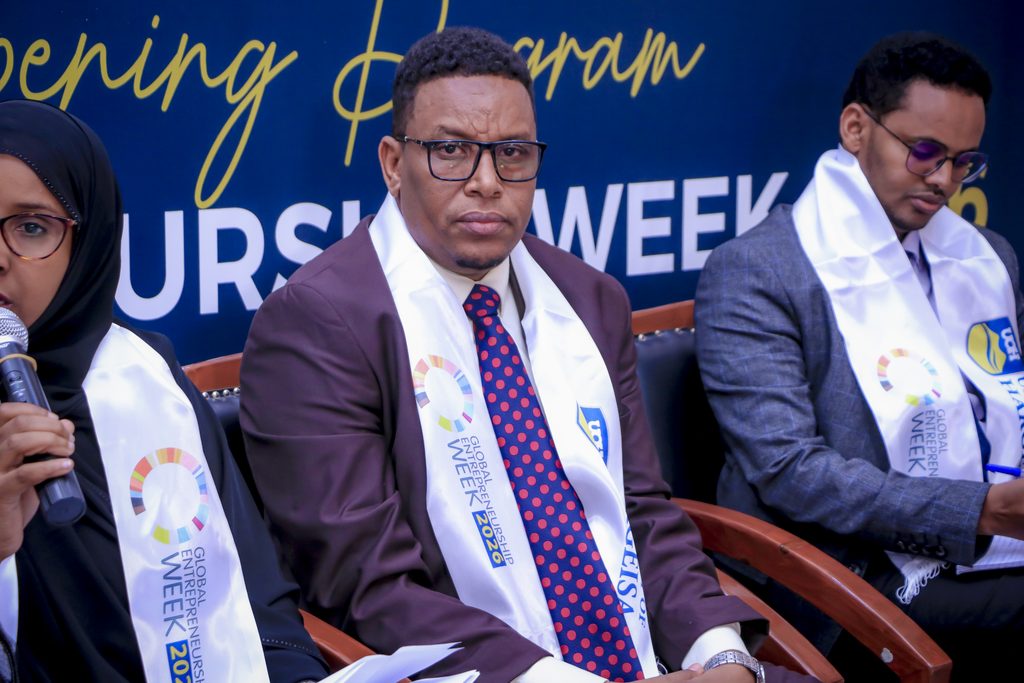
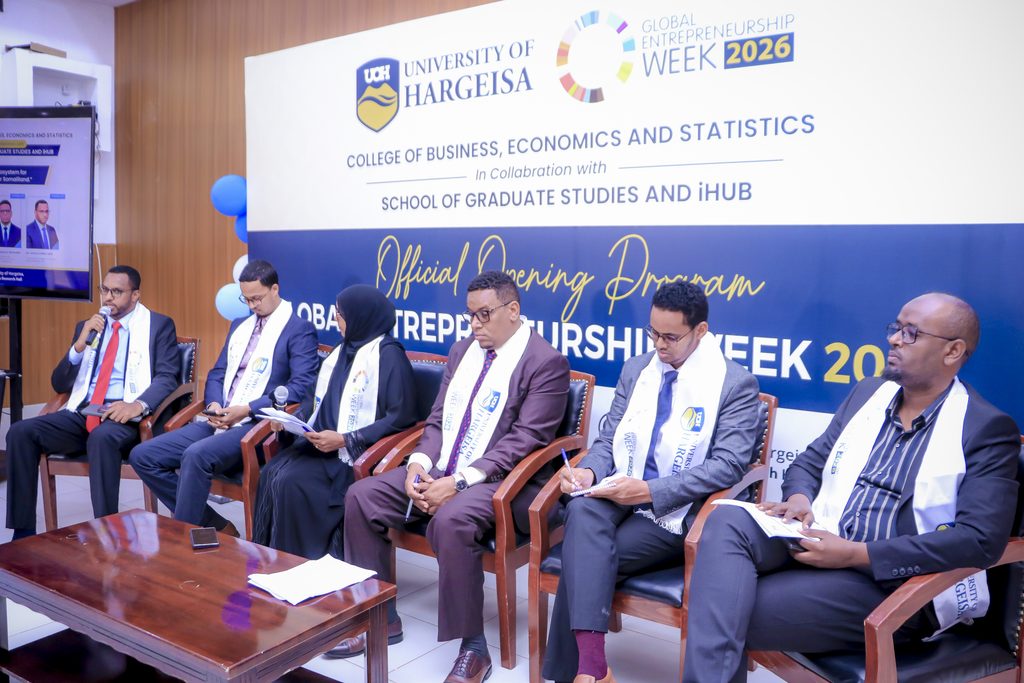
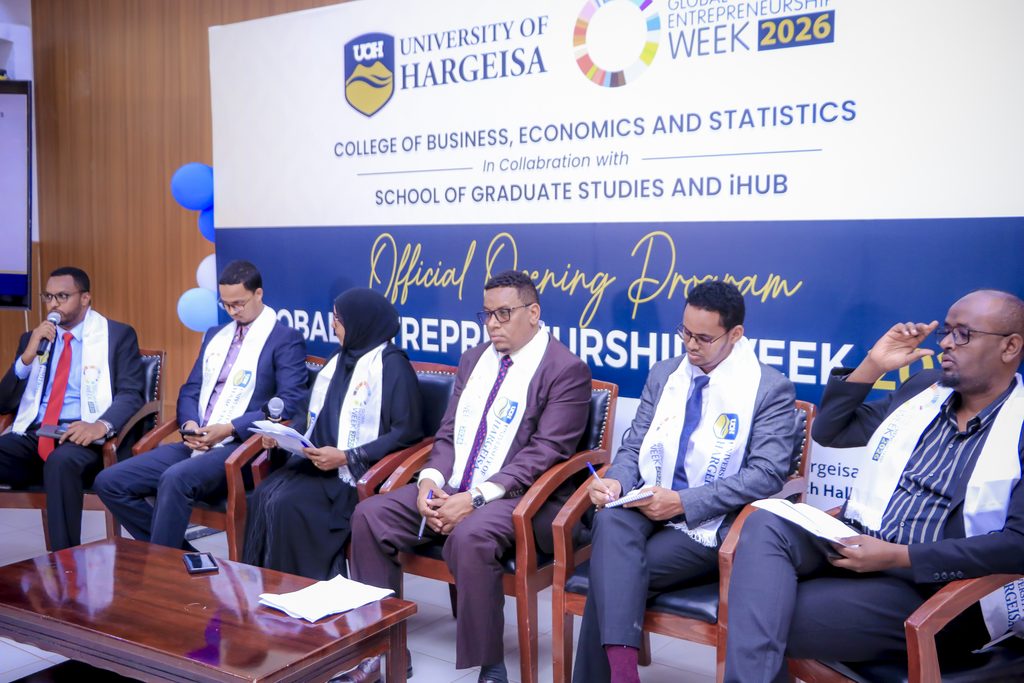
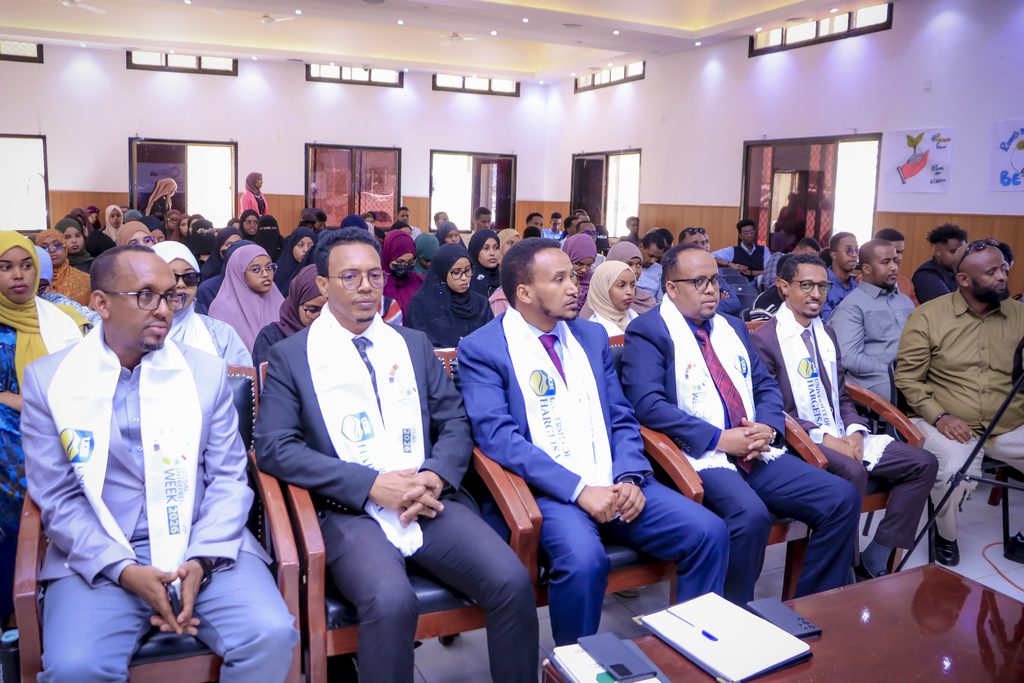
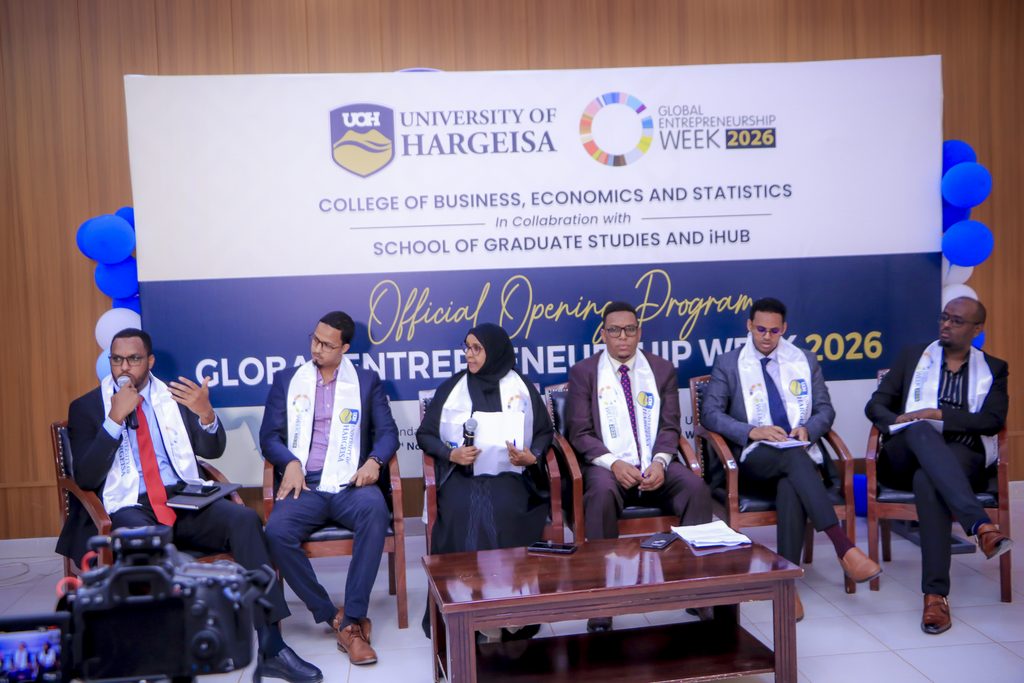
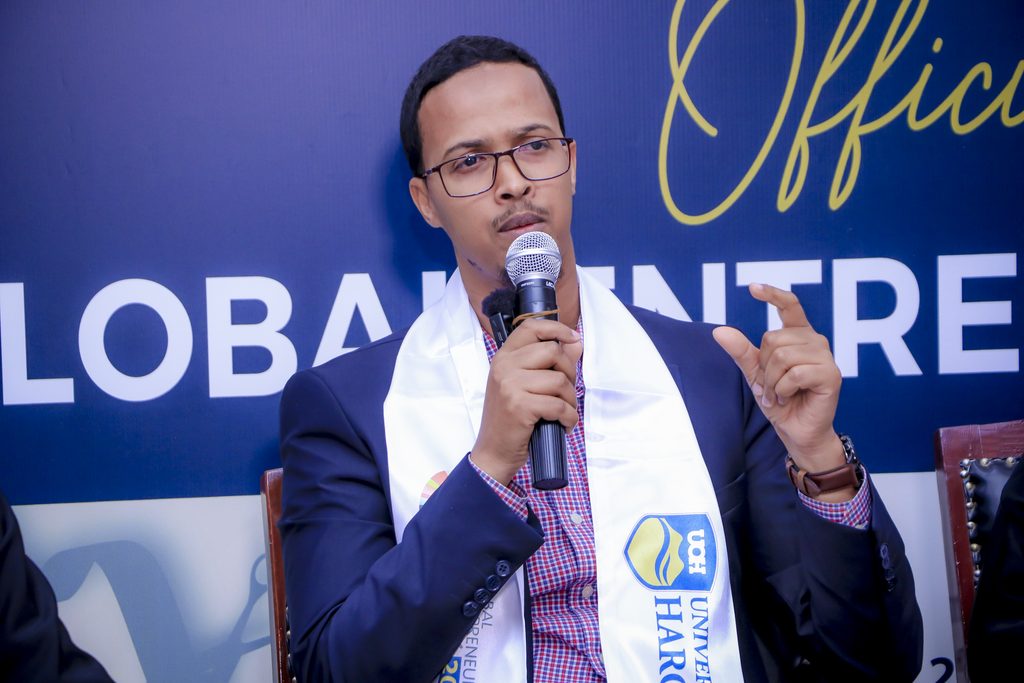
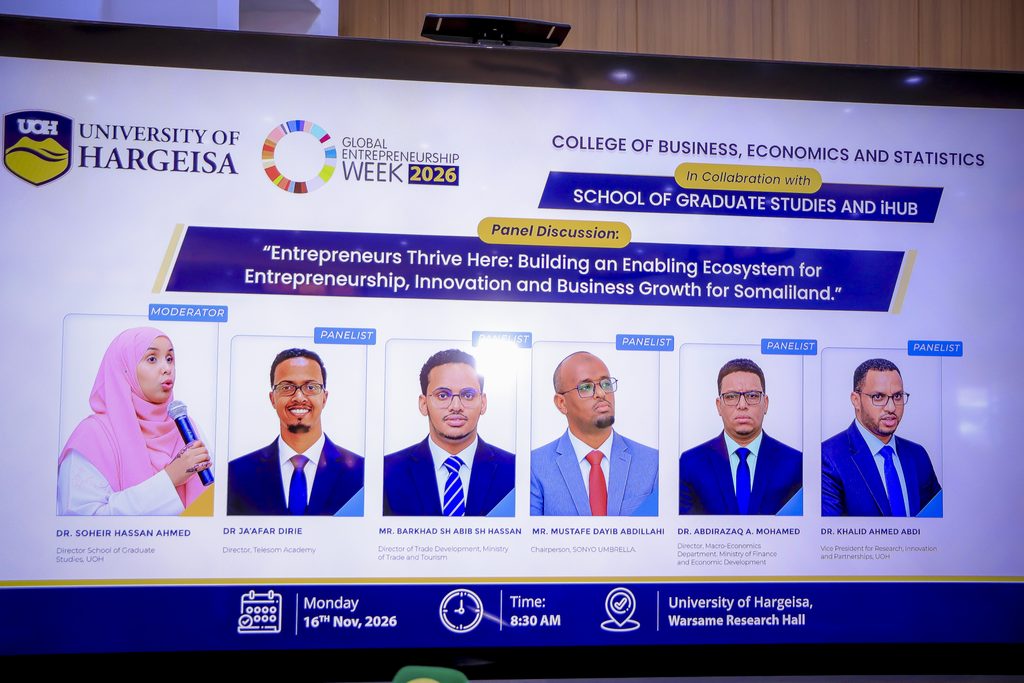
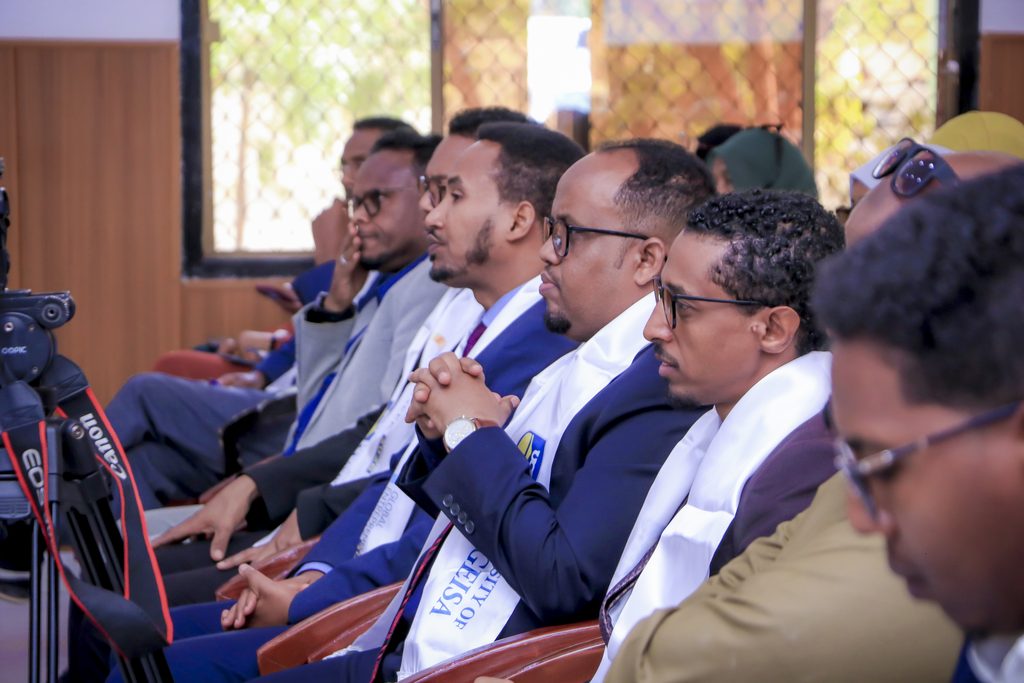
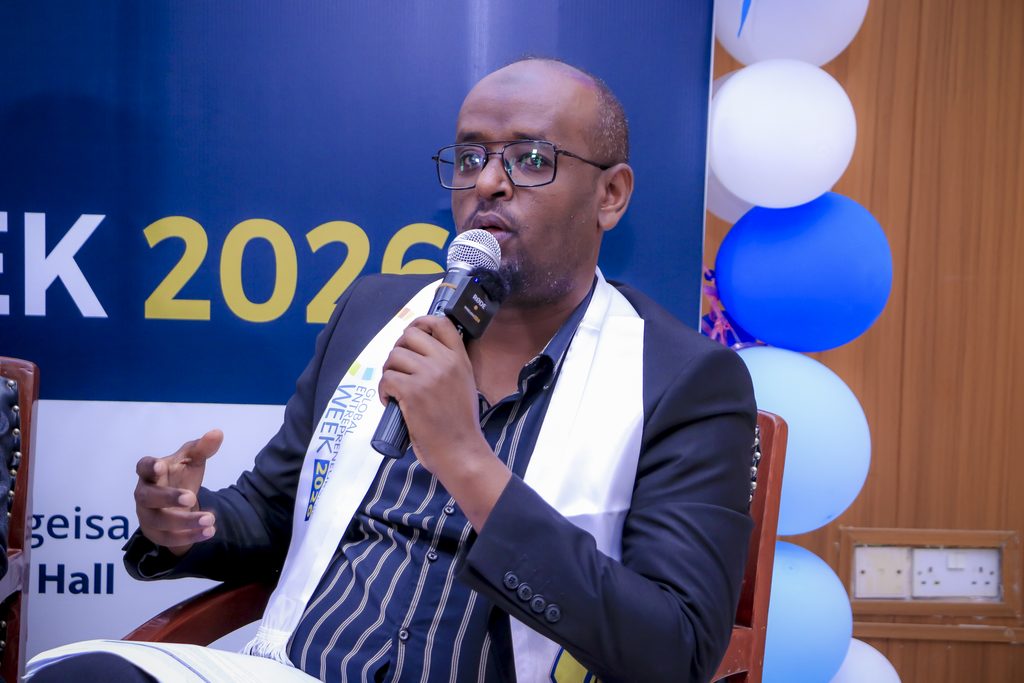
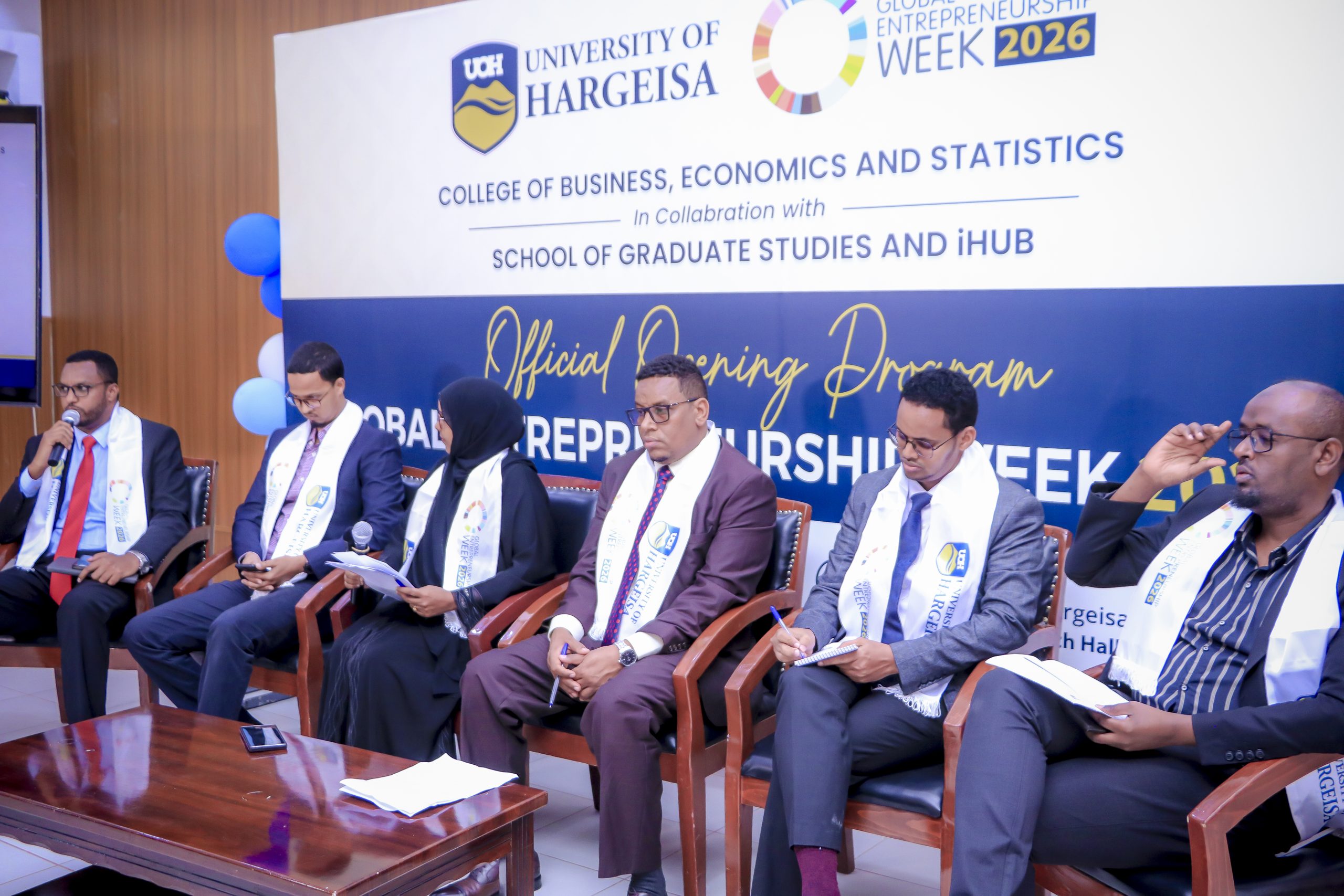
The University of Hargeisa hosted a high-level panel discussion titled “Building an Enabling Ecosystem for Entrepreneurship, Innovation and Business Growth for Somaliland” as part of its Global Entrepreneurship Week (GEW) 2026 celebrations, held under the theme “Entrepreneurs Thrive Here!”
The panel brought together representatives from academia, government institutions, the private sector, and youth organizations to examine the opportunities, challenges, and institutional support mechanisms necessary to strengthen entrepreneurship, promote innovation, and accelerate sustainable business development in Somaliland.
Organized by the College of Business, Economics and Statistics (BEST) in collaboration with the School of Graduate Studies (SGS) and iHub-UOH, the discussion provided a platform for exploring how universities, policymakers, established businesses, and youth-focused institutions can work collectively to create an enabling environment in which entrepreneurs can establish, develop, and expand their businesses.
The discussion featured five panelists representing key sectors of Somaliland’s entrepreneurship ecosystem:
The discussion explored the transformation of traditional higher education institutions into entrepreneurial universities that extend their contributions beyond academic teaching and graduate production to actively supporting entrepreneurs, innovators, startups, and sustainable enterprises.
With particular reference to the University of Hargeisa, Dr. Khalid Ahmed Abdi, Vice President for Research, Innovation and Partnerships, addressed themes concerning the role of universities in developing entrepreneurial capabilities and creating pathways for students and graduates to establish businesses.
The discussion also examined the University’s experience with the International Labour Organization’s Start and Improve Your Business (SIYB) programme and other entrepreneurship and innovation initiatives.
Another major focus was research commercialization and the need to bridge the gap between academic research and practical economic applications. The panel considered how universities can strengthen connections with private sector organizations to transform research findings into marketable products, innovative services, and viable business opportunities.
The discussion further raised the importance of establishing institutional mechanisms, industry partnerships, business incubation structures, and collaboration frameworks that can support innovation and encourage the practical application of university-generated knowledge.
Dr. Jaafar Dirie, Chief Executive Officer of Telesom Academy, participated in discussions concerning the growing importance of digital technologies in entrepreneurship and business competitiveness.
The session examined the essential digital skills that entrepreneurs in Somaliland need to develop to compete effectively in an increasingly technology-driven business environment.
Particular attention was given to young entrepreneurs and women seeking to establish or expand businesses, including the role of digital literacy, technological capabilities, and access to digital business opportunities.
Drawing on the experiences of Telesom Academy and the AMBAQAAD programme, the discussion explored how digital skills development initiatives can contribute to the growth of entrepreneurship and improve access to emerging economic opportunities.
The panel also considered the wider contribution of established private sector companies to entrepreneurship development, including how large businesses can support startups through mentorship, digital capacity building, access to markets, and business development partnerships.
Opportunities associated with artificial intelligence, digital innovation, and emerging technologies were also included among the topics, particularly their potential to create new business models and opportunities for young entrepreneurs in Somaliland.
Representing the Ministry of Trade and Tourism, Mr. Barkhad Hassan, Director of Trade Development, participated in discussions focusing on the regulatory and institutional conditions required to support entrepreneurship and business growth.
The panel examined challenges associated with business registration, licensing, regulations, access to finance, and market entry, particularly for startups and small and medium-sized enterprises (SMEs).
The discussion explored the importance of creating a more supportive business environment through effective public policies, streamlined procedures, and stronger coordination between government institutions and entrepreneurship support organizations.
Another significant area of discussion was market access and business expansion.
The panel considered opportunities for Somaliland businesses to move beyond local markets, improve their competitiveness, engage in cross-border trade, and explore regional and international business opportunities.
The need for collaboration among the Ministry, universities, business associations, and entrepreneurship support institutions was also highlighted as a central topic in developing coordinated support mechanisms for emerging and growing enterprises.
Youth entrepreneurship and employment were central themes of the panel, with Mr. Mustafe Dayib, Chairperson of SONYO, representing the perspectives of young people and youth development organizations.
The discussion explored the challenges that prevent many educated and talented young people in Somaliland from establishing successful businesses, despite their entrepreneurial potential.
Particular attention was given to the importance of changing the mindset of young people from primarily seeking employment to creating employment opportunities for themselves and others.
The panel examined the potential role of youth organizations in promoting entrepreneurial awareness, encouraging innovation, strengthening business development skills, and connecting young entrepreneurs with institutions capable of providing technical and financial support.
The discussion also considered how SONYO and similar organizations can contribute to a stronger entrepreneurship ecosystem by bringing together universities, government institutions, financial organizations, and private sector companies.
The session emphasized entrepreneurship as an important area for addressing youth economic participation and supporting the development of a more innovative and productive workforce.
The panel also addressed the role of economic and fiscal policies in creating a supportive environment for entrepreneurship.
Dr. Abdirazaq Ali Mohamed, Director of the Macroeconomics Department at the Ministry of Finance and Economic Development, participated in discussions examining how taxation, public expenditure, financial incentives, and other policy instruments can influence investment, entrepreneurship, and the development of small businesses.
The session explored potential approaches to reducing the financial pressures faced by startups and emerging enterprises, particularly during their early stages of development.
Among the topics considered were targeted tax incentives, financial support mechanisms, policies supporting business formalization, and measures to encourage innovation and investment.
The discussion further examined the potential role of government-backed financing and credit guarantee mechanisms in improving access to finance for SMEs.
These policy questions formed an important part of the broader discussion on strengthening Somaliland’s entrepreneurship ecosystem and creating conditions that enable businesses to survive, expand, and contribute to long-term economic growth.
Throughout the panel, the central theme was the importance of collaboration among the institutions responsible for entrepreneurship development.
The discussion connected several essential dimensions of a functioning entrepreneurial ecosystem, including entrepreneurship education, research commercialization, digital skills, private sector mentorship, supportive regulations, access to finance, youth empowerment, and market development.
These interconnected themes highlighted the need for coordinated efforts rather than isolated initiatives.
Universities have an important role in developing knowledge and entrepreneurial skills, while government institutions shape the policy and regulatory environment. Private sector organizations provide commercial experience, mentorship, technological expertise, and market connections, while youth organizations and development partners can help broaden participation and improve access to opportunities.
The panel concluded its agenda with a common question addressed to all participants, drawing directly on the Global Entrepreneurship Week 2026 theme, “Entrepreneurs Thrive Here!”
Panelists were invited to identify the most important change needed in Somaliland to turn this aspiration into a practical reality in which entrepreneurs can establish businesses, innovate, grow, and flourish.
Hosting the panel discussion forms part of the University of Hargeisa’s broader efforts to strengthen entrepreneurship education, promote research-driven innovation, and expand collaboration with government institutions, the private sector, and development organizations.
Through the College of Business, Economics and Statistics, the School of Graduate Studies, and iHub-UOH, the University continues to promote opportunities that connect academic learning with entrepreneurial practice and economic development.
The discussion contributed to the objectives of Global Entrepreneurship Week 2026, celebrated at the University from 16 to 26 November 2026, by providing a platform for dialogue among stakeholders whose institutions play important roles in shaping Somaliland’s entrepreneurial environment.
By bringing together perspectives from higher education, telecommunications and digital training, trade development, youth leadership, and economic policymaking, the panel highlighted the importance of a comprehensive approach to entrepreneurship development.
The University of Hargeisa remains committed to nurturing innovation, strengthening university–industry partnerships, promoting entrepreneurial thinking, and preparing graduates to become innovators, business founders, and contributors to Somaliland’s sustainable economic and social development.