

Hargeisa, Somaliland | 14 November 2026
The University of Hargeisa commemorated World Diabetes Day 2026 on Saturday, 14 November 2026, through a comprehensive programme of public health awareness, expert discussions, and free diabetes screening services. Held under the theme “Act Early on Diabetes: Community Awareness, Screening and Action Day,” the event aimed to promote early detection, strengthen public understanding of diabetes, and encourage preventive healthcare practices among students, university staff, and the wider community.
The event was jointly organized by the School of Graduate Studies (SGS), College of Medicine and Health Sciences (CMHS), National Institute for Health Research (NIHR), and the University Clinic at the University of Hargeisa. The main programme took place at Warsame Research Hall, while community health screening activities were conducted near the University’s main student entrance.
The official commemoration brought together university leaders, medical professionals, academics, students, and representatives of healthcare organizations to raise awareness about one of the major non-communicable diseases affecting communities worldwide.
Among the distinguished participants were Dr. Khalid Ahmed Abdi, Vice President for Research, Innovation and International Relations; Dr. Sa’ad Abdiwali Ahmed, Vice Dean of the College of Medicine and Health Sciences; Dr. Suhayr Hassan Ahmed, Director of the School of Graduate Studies; Abdirahman Hoori, representing the Somaliland Medical Association; and Dr. Ismail Ibrahim Osman, Head of the University Clinic.
The opening programme emphasized the importance of improving public awareness, promoting regular health checks, and strengthening cooperation between academic institutions, healthcare professionals, and community organizations.
The event also highlighted the University of Hargeisa’s commitment to connecting academic expertise with practical community health initiatives. Through its academic departments, research institutions, and healthcare facilities, the University continues to promote health education, disease prevention, and community engagement.
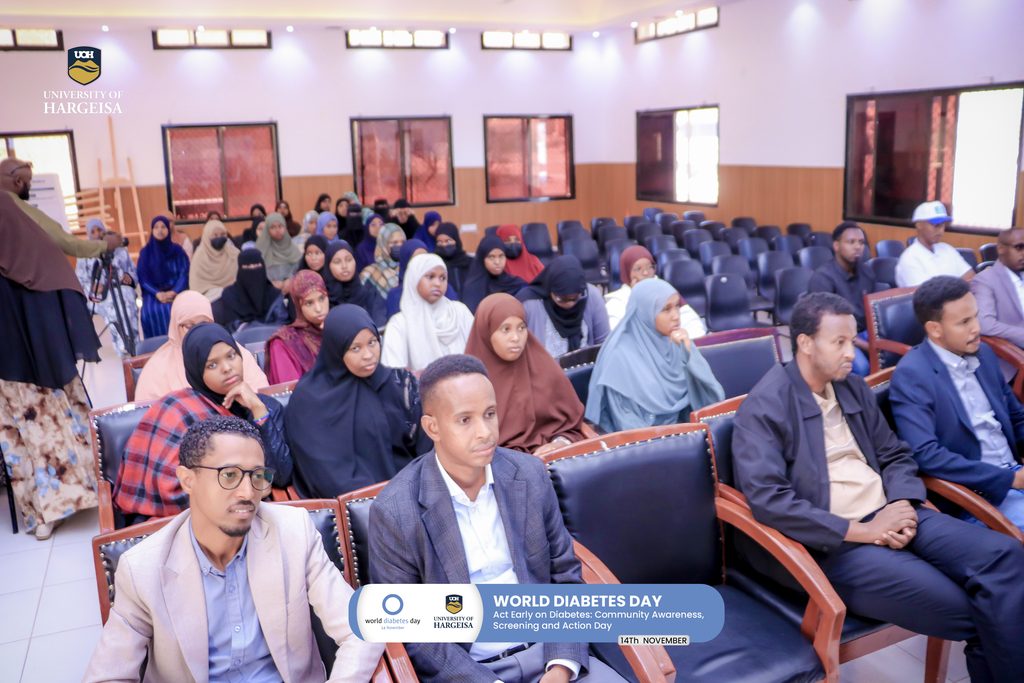
A major highlight of the commemoration was an expert panel discussion titled “Diabetes Across the Life Course,” which explored diabetes prevention, early detection, treatment, and long-term management across different stages of life.
The discussion was moderated by Dr. Ismail Ibrahim Osman, Head of the University of Hargeisa Clinic, and featured four healthcare professionals with expertise in clinical medicine, nutrition, child health, and diabetes advocacy.
The panelists included:
The discussion was structured around three major thematic areas, allowing the panelists to examine diabetes from clinical, nutritional, social, and public health perspectives.
The first segment focused on common misconceptions about diabetes and how misinformation can delay diagnosis and treatment. The discussion explored the warning signs of diabetes in children and adults, the importance of screening individuals at risk, and the steps patients should take following an abnormal blood glucose test.
Particular attention was given to the early identification of type 1 diabetes among children and the importance of timely medical intervention.
The session also addressed the relationship between dietary habits, physical inactivity, and the increasing risk of type 2 diabetes, highlighting the importance of preventive measures and healthier lifestyle choices.
The second segment explored the challenges experienced by individuals living with diabetes, including access to healthcare, social misconceptions, and the need for continuous medical support.
The discussion covered practical approaches to diabetes management, including balanced nutrition, blood glucose monitoring, treatment adherence, and preventing complications affecting the heart, kidneys, eyes, and nervous system.
The panel also considered how families, teachers, and healthcare providers can support children living with type 1 diabetes, particularly in school environments.
Nutrition was another important area of discussion, with attention given to affordable and balanced diets using commonly available foods in Somaliland. The session examined how portion control and informed food choices can support diabetes management without placing unnecessary financial pressure on patients and their families.
The final segment focused on strengthening community-based diabetes prevention, improving access to screening services, and addressing gaps in healthcare delivery.
The discussion explored the potential contributions of universities, healthcare institutions, schools, and community leaders in expanding awareness and improving diabetes-related services.
It also examined the importance of research in understanding the burden of diabetes in Somaliland, identifying gaps in available evidence, and evaluating the long-term effectiveness of community screening and awareness initiatives.
The panel provided a platform for connecting medical expertise with the practical healthcare needs of the community, reinforcing the importance of coordinated action in addressing diabetes.
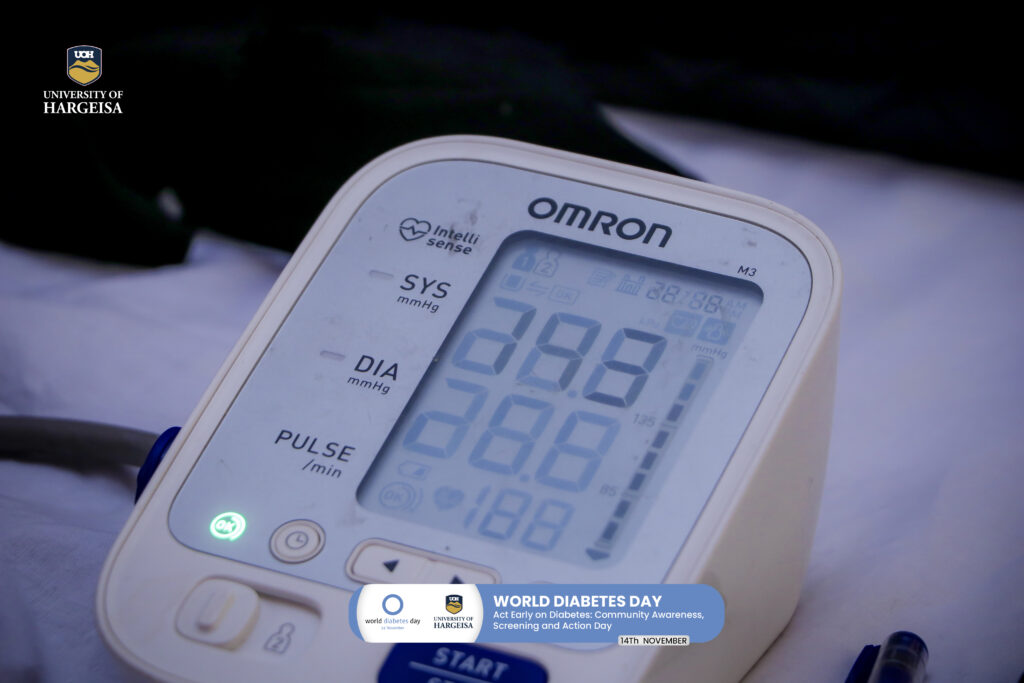
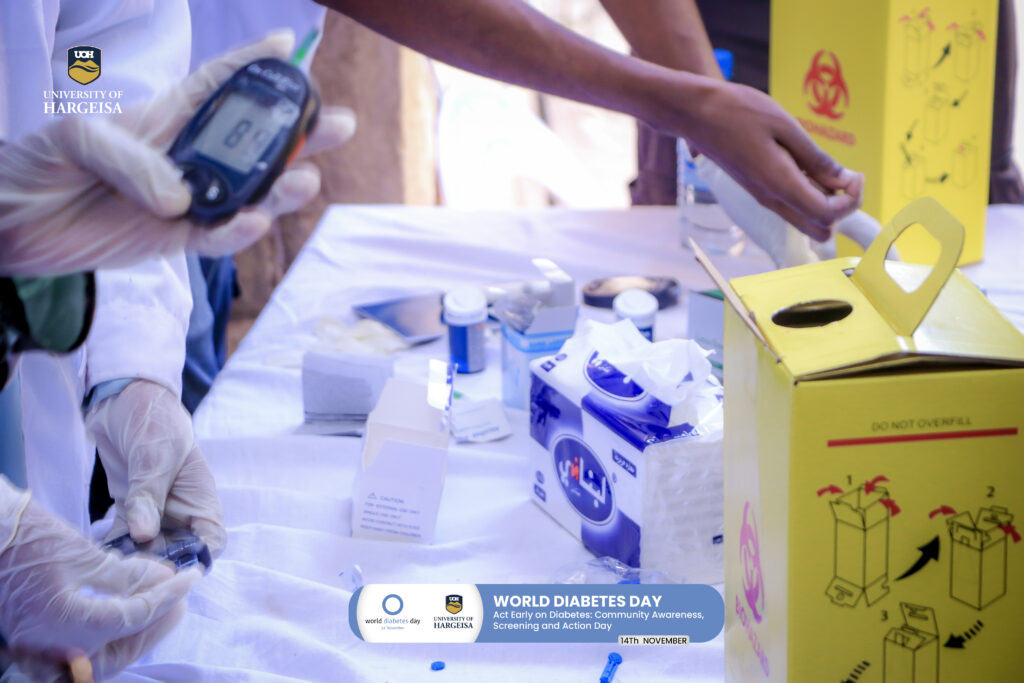
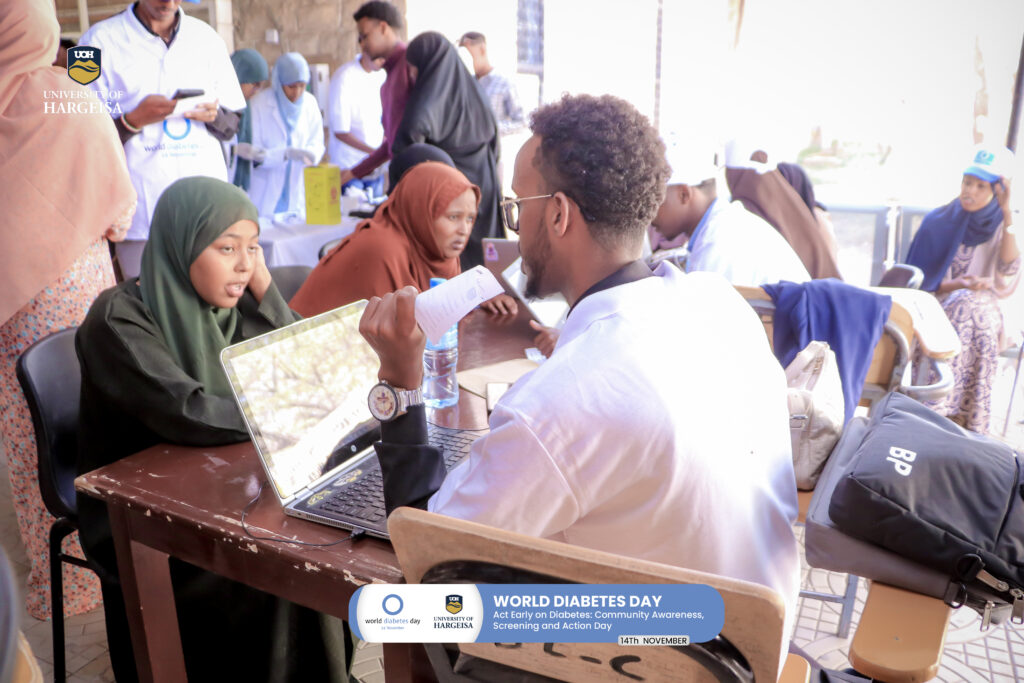
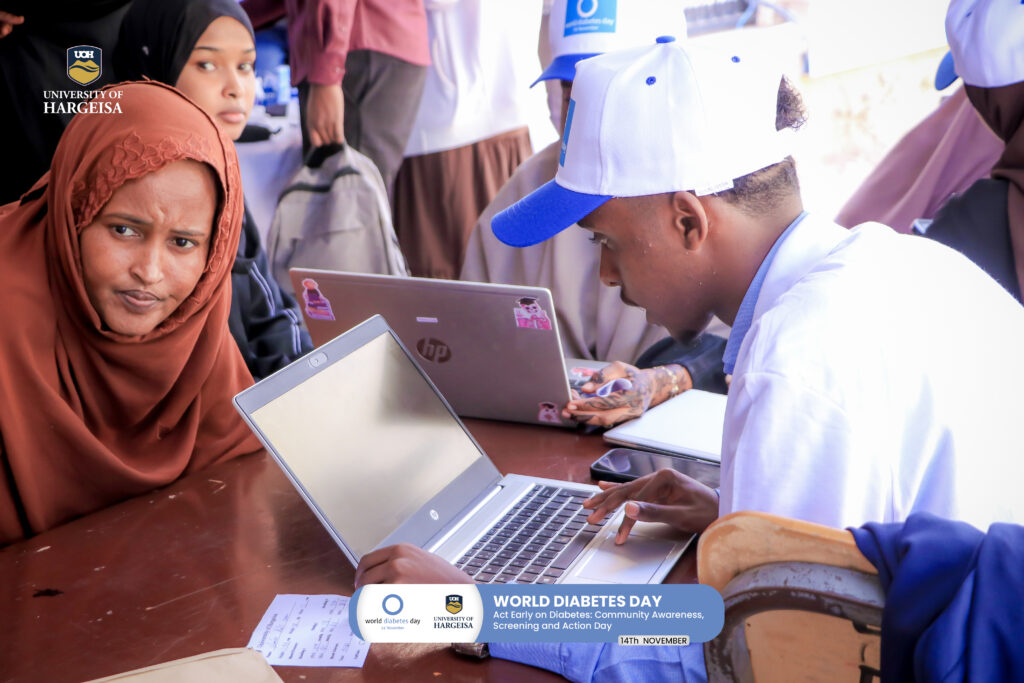
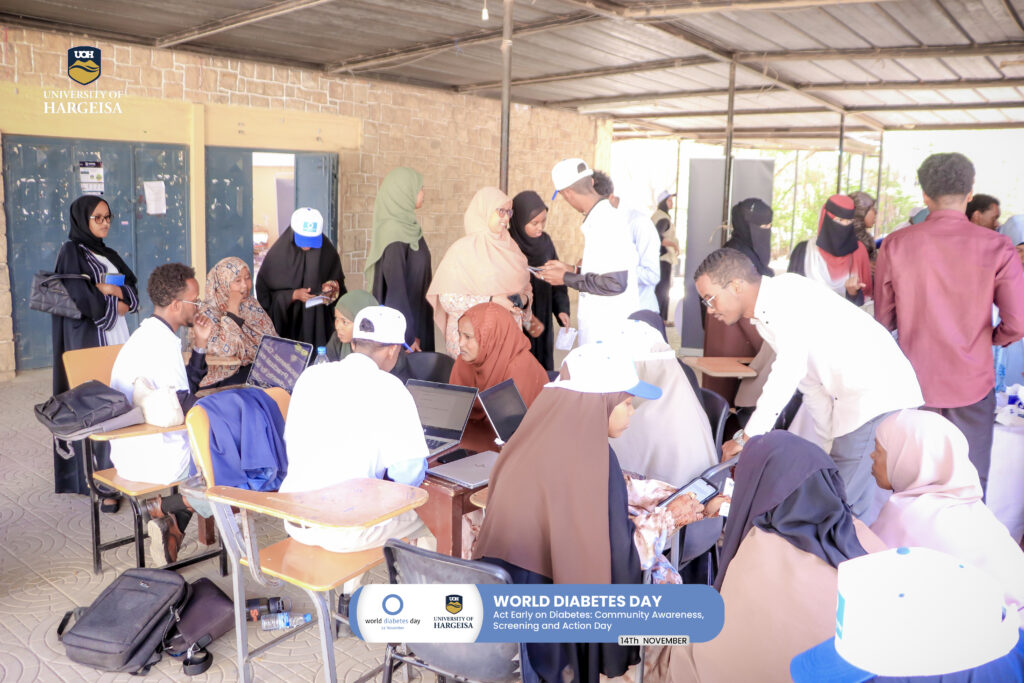
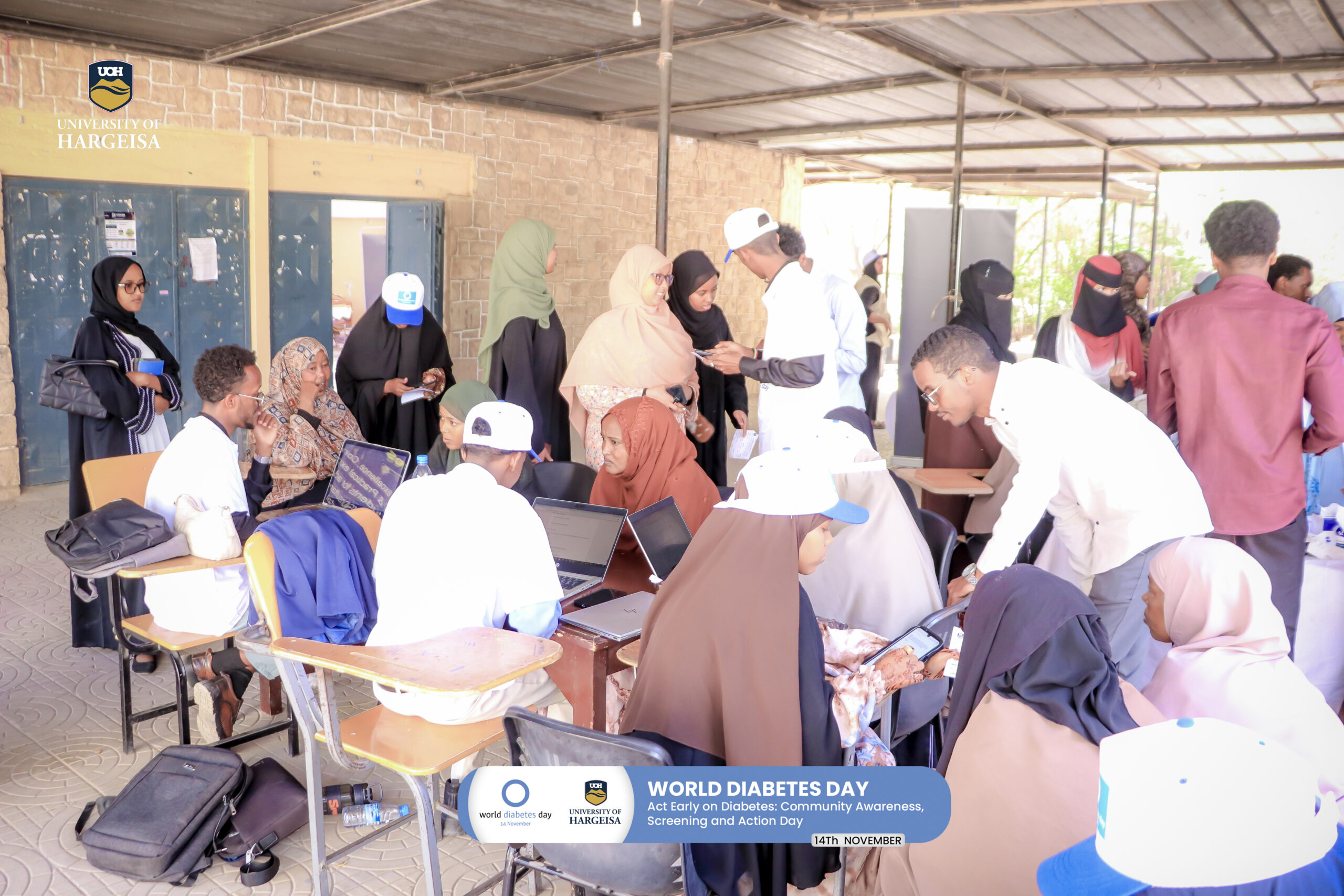
Alongside the official programme, the University of Hargeisa conducted a large-scale community diabetes screening initiative near the University’s main student gate, providing free blood glucose testing to students, university employees, and members of the surrounding community.
More than 400 individuals were screened during the activity, demonstrating the importance of accessible preventive healthcare services and the community’s interest in understanding their health status.
The screening campaign aimed to encourage individuals to check their blood sugar levels, increase awareness of diabetes-related health risks, and promote early medical assessment where necessary.
By bringing screening services directly to an accessible location within the University, the initiative provided an opportunity for individuals who might otherwise delay routine health checks to assess their blood glucose levels.
The exercise also complemented the awareness activities conducted during the commemoration, translating health education into practical community services.
The involvement of the University’s health professionals and participating institutions demonstrated the value of combining clinical expertise, academic knowledge, and community outreach in promoting preventive healthcare.
The World Diabetes Day 2026 commemoration reflected the University of Hargeisa’s continued commitment to public health promotion, research, and community service.
By integrating an official awareness programme, an expert-led panel discussion, and free community screening services, the event addressed diabetes through education, prevention, and direct public engagement.
The collaboration among the School of Graduate Studies, College of Medicine and Health Sciences, National Institute for Health Research, and University Clinic further demonstrated the importance of interdisciplinary cooperation in responding to community health challenges.
The event reinforced a central public health message: early detection, informed lifestyle choices, regular medical follow-up, and community awareness are essential to reducing the impact of diabetes.
Through initiatives of this kind, the University of Hargeisa continues to strengthen its contribution to improving health awareness, supporting preventive healthcare, and advancing community well-being in Somaliland.